Perception
What is present?
Color, edge, sound, date, a beetle on glass. Stay with what arrived before a name, a memory, or a theory begins to speak for it.1
Grammar
After a looking, a sentence often arrives. This means. This caused. This was sent. Perception is not yet association. Association is not yet interpretation. Interpretation is not yet a claim.
Hold the claim at its size.
Perception
What is present?
Color, edge, sound, date, a beetle on glass. Stay with what arrived before a name, a memory, or a theory begins to speak for it.1
Association
What arose?
Magritte. A grandmother’s kitchen. A number you already love. It belongs to the encounter. It is not yet in the plate.
Interpretation
What might I make of it?
A reading. Several can live at once. Not yet a law.
Claim
What do I assert is true?
Hold it at its size. Some sentences stay with what was seen. Some grow larger than it.
World
Light, sound, objects, documents, events.
Observer
Attention, memory, culture, feeling, association.
House
Selection, crop, caption, pairing, sequence, timing.
Meaning
Why it mattered.
A pattern may matter before we know what caused it. Feeling is evidence of feeling. It is not yet a law of the world.
Mechanism
How it happened, if we can say.
Cause, coincidence, selection, base rate, a beetle doing what beetles do. Shared words are not shared machinery.
Meaning is not the same claim as cause.
Presence
Record
Sentence
When a theoretical word starts doing causal work it has not earned, the claim has already outgrown the looking. Psychoid is a name for a problem, not a demonstrated hidden mechanism.2
Notes
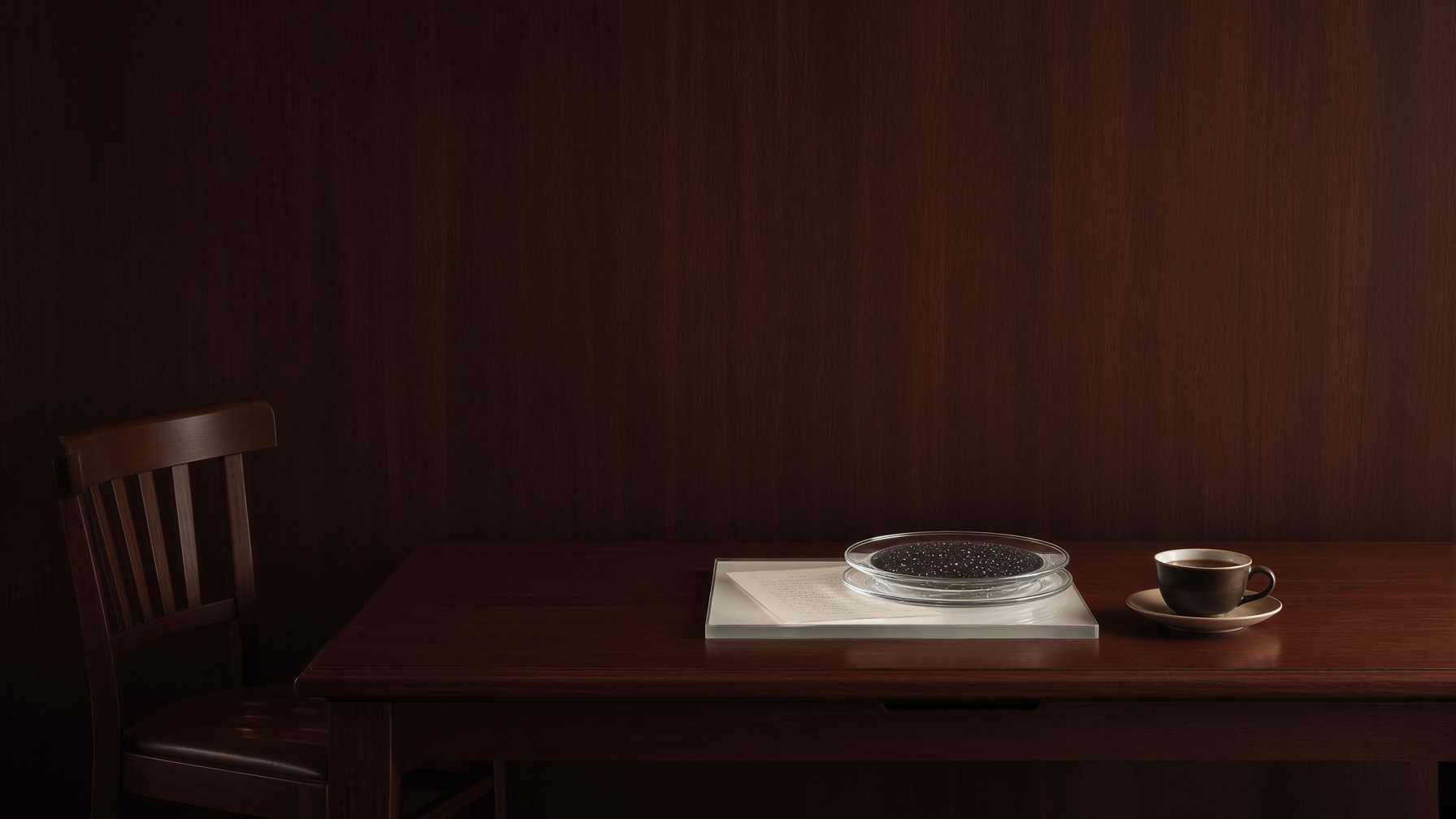
Learning to see what is there, what connects, and what we bring to the seeing.