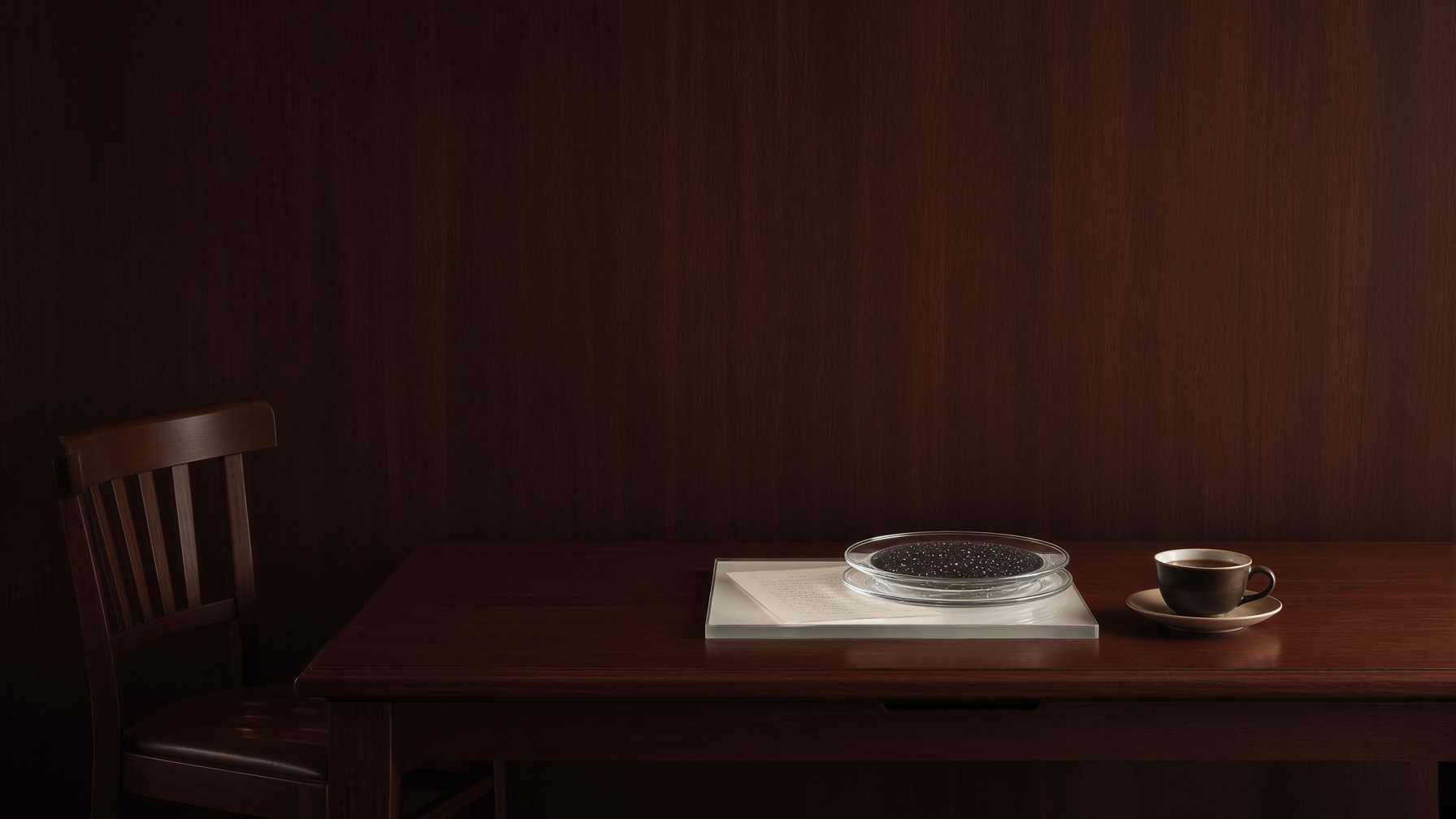
Reconstruction
What memory added
Memory · 1932 · Cambridge, then every remembering
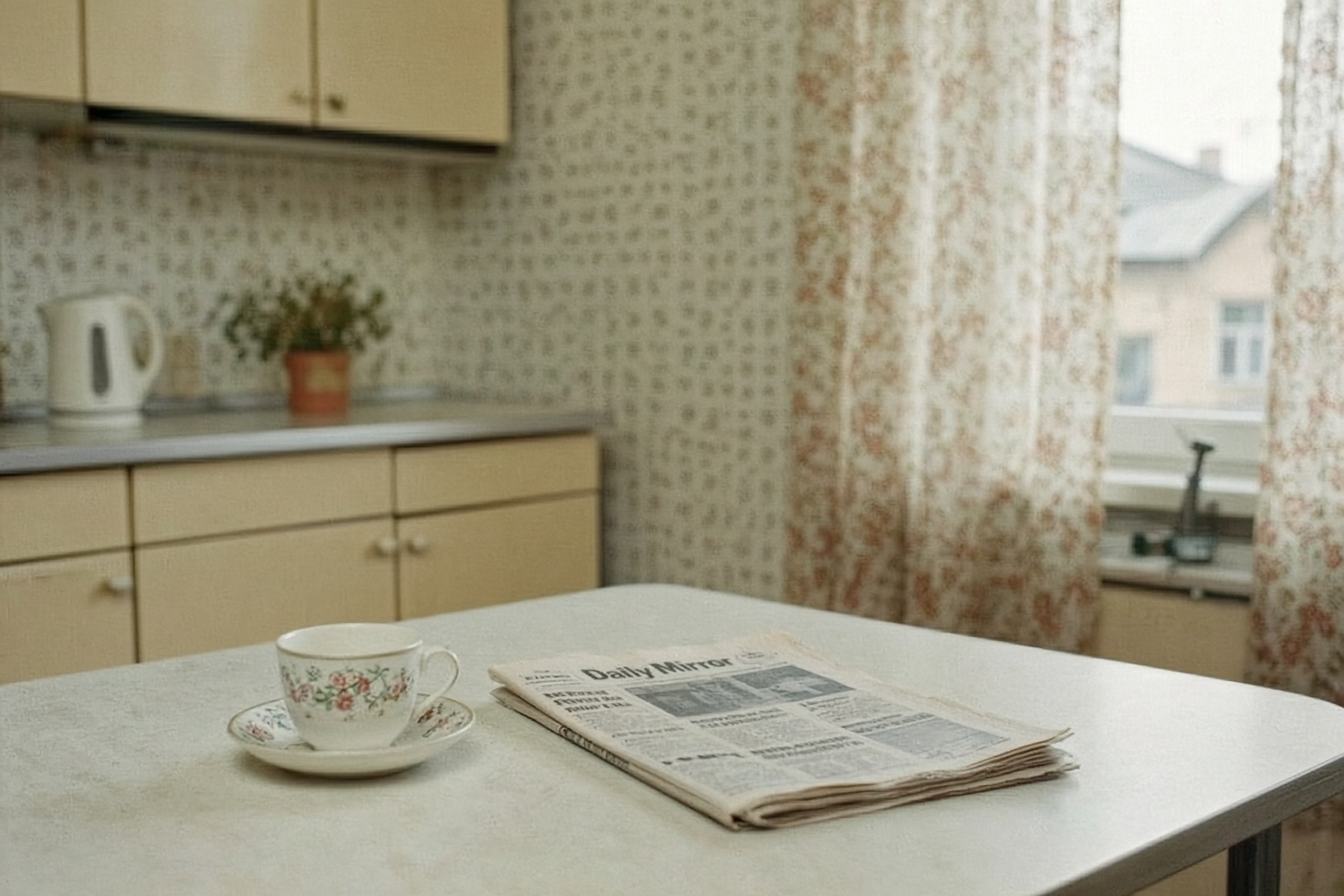
Before any childhood is named, notice what the cup is doing to the table.
Bartlett asked Cambridge students to remember a Native American story that did not match their habits of narrative. Over retellings the canoes became boats, the ghosts thinned, and the plot grew more English. The changes were not random. They were the culture of the rememberer, working.
Sourced
This kitchen is not Bartlett’s stimulus. It is a plate for practicing the same fact: a second look is not the same as the first, and a memory is not a copy.
Invite recognition. Never manufacture memory.
Concordance
- The thing
- A remembered image is not a stored photograph.
- Seen
- Table, cup, paper, curtain light, a slight blur.
- Sourced
- Frederic Bartlett, Remembering (1932). Repeated reproduction of ‘The War of the Ghosts’ showed conventionalization, omission, and invented connective tissue.
- Miss
- Details that do not fit a schema drop out. Confidence does not measure accuracy.
- One question remains
- What remained, and what did you add?