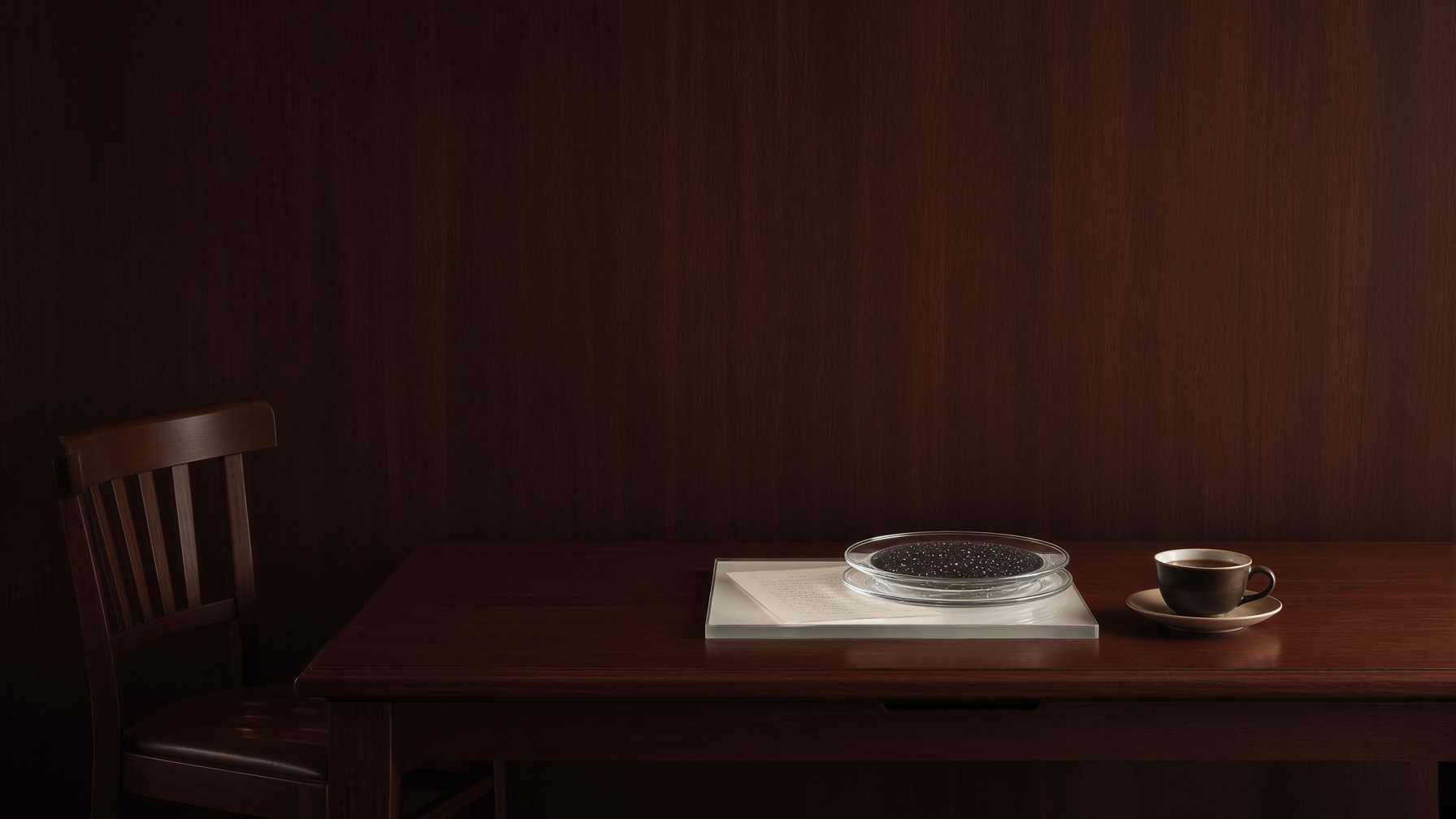
Jung reports, in the 1952 essay: a consulting room. A dream of a golden scarab, jewelry. A tap at the window. A gold-green rose chafer. He caught it. He said: here is your scarab. We have his telling. We do not have hers.1
Four readings
Historical
Jung published the case in 1952 as an illustration, not as a controlled observation. The consulting room, the dream, the insect, and the sentence are his report.
Psychological
The shock mattered clinically, on Jung’s telling. Meaning did work in the room. That is a different claim from a law of nature.
Cognitive
Attention selects. A rare image in a dream makes a similar insect more noticeable. Frequency of beetles at windows is the missing denominator.
Skeptical
One story, one narrator, no base rate, no misses recorded. Beautiful. Insufficient as proof of acausal order.
Denominator
1
Recorded striking case, Jung’s telling.
Unknown field. Similar dreams with no beetle. Weather. The woman’s own account.
What can be claimed, and what remains a report of meaning?
Notes
- C. G. Jung, “Synchronicity: An Acausal Connecting Principle,” in The Structure and Dynamics of the Psyche, trans. R. F. C. Hull, 2nd ed., vol. 8 of The Collected Works of C. G. Jung, 417–519 (Princeton: Princeton University Press, 1969).